Why Is My Roof Leaking During a Utah Snowstorm? The Ice Dam Problem Explained
Why Is My Roof Leaking During a Utah Snowstorm? The Ice Dam Problem Explained
If you have ever noticed water stains appearing on your ceiling during — or shortly after — a heavy snowstorm in Park City, Utah, you are not alone. It is one of the most confusing and alarming things a homeowner can experience: it is snowing outside, temperatures are below freezing, and yet there is water coming into your home. The culprit in virtually every case is an ice dam.
This guide explains exactly what ice dams are, why they form so aggressively on Park City roofs, and what you can do to stop them for good.
What Is an Ice Dam and Why Does It Cause a Leak?
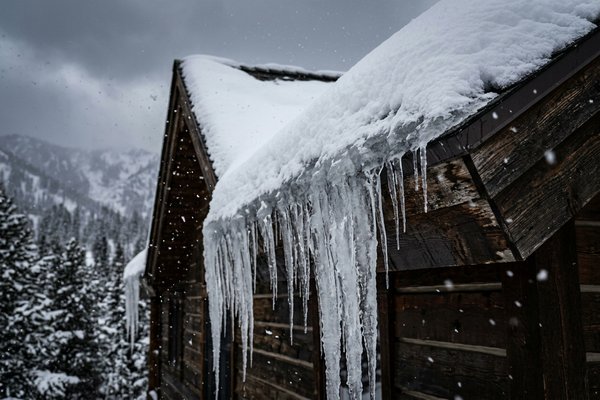
An ice dam is a ridge of solid ice that forms at the edge of a roof and prevents snowmelt from draining off. Once water backs up behind that ice ridge, it has nowhere to go except under your shingles, through your roof deck, and into your home.
The cruel irony is that ice dams form because heat is escaping from your living space into the attic. That warm air heats the upper portion of the roof, melting the bottom layer of snow. That meltwater flows down the roof slope toward the colder eaves — which hang over the exterior wall and have no heat below them — and refreezes. Repeat that cycle a few dozen times across a Park City winter and you end up with a thick, heavy ice dam that acts like a dam on a river.
Why Park City Roofs Are Especially Vulnerable
Park City, Utah receives 300 or more inches of snow each season. Combine that snowfall volume with dramatic overnight freeze-thaw cycles, steep ski-chalet roof pitches, and the prevalence of luxury homes with complex valley and dormer configurations, and you have nearly ideal conditions for severe ice dam formation. Many Park City neighborhoods — including Deer Valley, Promontory, and the Canyons area — sit at elevations above 7,000 feet, where these temperature swings are more extreme than in the Salt Lake Valley below.
The Step-by-Step Anatomy of a Roof Leak Caused by an Ice Dam
Understanding the sequence helps you diagnose exactly what is happening on your roof:
Step 1 — Snow accumulates on the roof
A Park City storm deposits one, two, or even three feet of snow across your entire roof surface.
Step 2 — Heat escapes from the attic
Insufficient attic insulation or ventilation allows warm air from your living space to warm the roof deck. The snow directly touching the roof begins to melt even when outside air temperatures are well below freezing.
Step 3 — Meltwater reaches the cold eaves and freezes
The water flows toward the roof edge where there is no heat below. It freezes solid and begins building a ridge of ice.
Step 4 — A pool of water forms behind the dam
As more snow melts, liquid water accumulates behind the ice ridge. This standing water sits on top of your shingles at the eave — a location shingles are not designed to handle as a waterproofing membrane for extended periods.
Step 5 — Water infiltrates the structure
Water finds the path of least resistance: under shingle laps, through nail holes, along flashing gaps. It enters the roof deck, soaks through insulation, and appears as ceiling stains, drips, or soaked drywall inside your home.
The Real Cost of Ignoring a Roof Leak Caused by Ice Dams
Many Park City homeowners make the mistake of mopping up the water and hoping the problem goes away when the snow melts. It does not. Each subsequent storm builds on the damage:
| Damage Type | Typical Park City Repair Cost |
|---|---|
| Drywall and ceiling repair | $800 – $3,500 |
| Insulation replacement (attic) | $1,500 – $5,000 |
| Flooring damage (hardwood warping) | $3,000 – $12,000 |
| Mold remediation | $2,000 – $15,000 |
| Structural wood rot (rafters, sheathing) | $5,000 – $25,000+ |
A professionally installed heat tape system that prevents ice dams entirely typically costs $2,500 to $8,500 — far less than a single serious water intrusion event.
How to Stop a Roof Leak Caused by Ice Dams
There are short-term measures and long-term solutions. Only one of them actually works.
Short-term (emergency only): Calcium chloride ice melt in a stocking laid across the dam can create a channel for water to drain. This is a temporary measure only and does not prevent recurrence.
Long-term (permanent solution): Professional heat tape installation addresses the root cause by creating a continuous, electrically heated path along eaves, valleys, gutters, and downspouts. Self-regulating heat cable activates automatically when temperatures approach freezing and shuts off when it is not needed — preventing ice dams from forming in the first place.
Heat Tape Roofing™ has been protecting Park City homes for over 20 years with commercial-grade, self-regulating heat tape systems. Our installations include a 5-year workmanship warranty and manufacturer product warranties of 10 to 25 years.
➡️ Related reading: Professional Heat Tape Installation in Park City
Frequently Asked Questions
Q: Can my roof be leaking from ice dams even if temperatures never go above freezing outside?
Yes. The heat driving ice dam formation comes from inside your home through the attic, not from the outside air. Even when it is 10°F outside, a poorly insulated attic can warm the roof deck enough to melt snow from below.
Q: My ceiling leak stops when the snow melts. Does that mean the problem is solved?
No. The damage to your roofing system, underlayment, and potentially your insulation may be progressive. Each ice dam season compounds the prior damage until a more serious failure occurs. This pattern is extremely common in Park City homes.
Q: Will better attic insulation alone fix my ice dam problem?
Improved attic insulation and ventilation is the ideal foundation and should be done in combination with heat tape. In Park City’s heavy-snow environment, insulation improvements alone are rarely sufficient to eliminate ice dam risk entirely across all roof planes. A combined attic ventilation and heat tape approach delivers the most reliable results.
Stop the Leak for Good — Get a Free Quote from Heat Tape Roofing™
If your Park City roof is leaking during snowstorms, the problem will not resolve itself. Every winter it goes unaddressed, the cumulative damage to your home grows. Heat Tape Roofing™ offers free, no-obligation site visits throughout the Park City area — including Deer Valley, Kimball Junction, Snyderville, and Heber City.
