Heat Tape vs. Roof Raking in Park City: Which Ice Dam Solution Is Safer, Cheaper & More Effective?
Heat Tape vs. Roof Raking in Park City: Which Ice Dam Solution Is Safer, Cheaper & More Effective?
When Park City homeowners first encounter a serious ice dam problem, two solutions typically come up in conversation: professional heat tape installation and roof raking. Both are presented as ways to manage ice dams, and both have genuine advocates. But they are fundamentally different in how they work, what they cost, how safe they are, and how effective they actually are in a high-snowfall mountain environment like Park City, Utah.
This is the definitive comparison — written by the team at Heat Tape Roofing™ with over 20 years of experience working on Park City roofs.
What Is Roof Raking and How Does It Work?
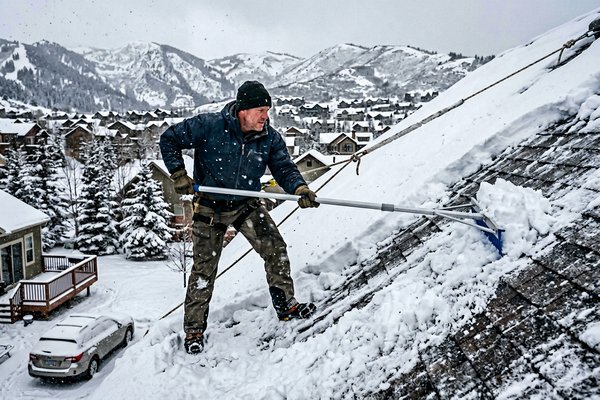
Roof raking involves pulling accumulated snow off your roof using a long-handled roof rake tool — typically from ground level or from a ladder. By removing snow before it can melt and refreeze, you theoretically eliminate the source material for ice dam formation.
In practice, it is more complicated than it sounds.
What Is Professional Heat Tape and How Does It Work?
Professional heat tape — specifically commercial-grade self-regulating heat cable — is installed along the eave zone, in roof valleys, inside gutters, and through downspouts. The cable creates a continuous heated path that maintains a clear drainage channel for snowmelt, preventing ice dams from forming in the first place.
Self-regulating cable automatically adjusts its heat output based on ambient temperature — maximising efficiency and eliminating overheating risk.
Head-to-Head Comparison
| Factor | Roof Raking | Professional Heat Tape |
|---|---|---|
| Effectiveness | Partial — only removes surface snow, does not address warmth escaping from attic | Complete — prevents ice dam formation at the source |
| Safety | High risk — falls, ice impact injuries, power line contact | No ongoing homeowner risk once installed |
| Cost per season | $0 (DIY) to $800–$2,000 (professional raking service) | $0 ongoing (electricity only, ~$50–$200/month) |
| Upfront cost | $50–$200 (rake purchase) | $2,500–$8,500 (one-time installation) |
| Time demand | After every significant storm (multiple times per week in peak season) | None — fully automatic |
| Roof damage risk | Yes — rakes can scratch, lift, and gouge shingles | None when professionally installed |
| Effective in all conditions | No — ineffective during or immediately after storms, ineffective on steep roofs | Yes — operates automatically 24/7 |
| Suitable for luxury/steep roofs | No — extremely dangerous on steep chalets | Yes — designed for complex roof profiles |
| Long-term solution | No — must be repeated every storm, every season | Yes — 10 to 15+ year system life |
| HOA compatible | N/A | Yes (with professional documentation) |
| Works on valleys and gutters | Rarely — raking valleys is unsafe | Yes — valleys and gutters are core coverage zones |
The Real Cost of Roof Raking Over 10 Years in Park City
Many Park City homeowners view raking as the “free” solution. Let us run the actual numbers:
DIY raking:
- Park City averages 45 to 60 significant snowfall events per winter
- A thorough raking session takes 2 to 4 hours depending on roof size
- That is 90 to 240 person-hours of physical labour per winter, in cold and often icy conditions
- Over 10 winters: 900 to 2,400 hours
Professional raking service (growing market in Park City):
- $200 to $600 per visit
- $3,000 to $12,000 per winter for regular service
- Over 10 winters: $30,000 to $120,000
Compare to heat tape: A professionally installed heat tape system for the same home costs $3,500 to $7,500 as a one-time investment, plus $50 to $200 per month in operating costs during winter. Over 10 years, total cost is typically $9,000 to $17,000 — including electricity.
The Safety Case: Why Roof Raking Is More Dangerous Than It Looks
Every winter, Utah emergency rooms treat patients injured during roof raking activities. The risks include:
Falls from ladders — Reaching up and pulling a heavy snow-laden rake while balanced on a ladder on uneven, icy ground is a documented fall hazard. Park City’s steep terrain and ice-covered driveways make this worse.
Roof edge ice dislodgement — Raking can dislodge large sheets of ice and heavy snow from the eave zone. These can fall directly onto the person raking, causing crush injuries.
Contact with power lines — Many Park City homes have utility lines running near the roof edge. A 21-foot metal-handle rake in close proximity to an energised line is a serious electrocution risk.
Roof surface damage — Improperly angled rakes gouge and lift shingles, removing protective granules and creating the very leakage points ice dams exploit.
The bottom line: roof raking is not the safe, simple task it is often presented as. It is a physically demanding, injury-prone activity that requires repetition every storm, season after season.
When Roof Raking Is (Briefly) Acceptable
There is one scenario where temporary raking makes sense: as an emergency measure during an active ice dam leak when no heat tape system is installed yet. Reducing snow load at the eave zone while waiting for a professional installation appointment can limit additional water infiltration in the short term.
Beyond emergency use, raking is not a long-term strategy for Park City homeowners who value their time, their safety, and their roof.
Frequently Asked Questions
Q: Can I combine roof raking and heat tape?
You can, but there is no benefit to raking if your heat tape system is functioning correctly. A properly installed heat tape system eliminates the need for raking by maintaining a clear drainage path regardless of snowfall. Raking on top of a working heat tape system may actually displace cable runs or cause unnecessary shingle contact.
Q: My neighbour rakes and never has ice dams. Why should I pay for heat tape?
Raking can work on simple, low-pitch roofs with easy access when done consistently and correctly. On the steep, complex, high-altitude roofs that characterise most Park City properties, the access challenges and safety risks make sustained raking impractical. Your neighbour’s success may also be influenced by favourable roof geometry, superior attic insulation, or simply good fortune during low-snowfall winters.
Q: Does heat tape work even during very heavy Park City snowfalls?
Yes. The cable does not prevent snow from accumulating on the roof — it creates a heated drainage channel at the critical zones where ice dams form. Even during a three-foot dump, meltwater that reaches the eave zone finds an open, ice-free path through the heated cable run, into the heated gutter, and down the heated downspout.
The Verdict Is Clear
For Park City homeowners who want permanent, safe, and truly effective ice dam prevention, professional heat tape installation is the decisive winner over roof raking. The one-time investment pays for itself after a single prevented damage event and eliminates years of physical labour, injury risk, and recurring service costs.
Compare Heat Tape Options for Your Park City Home — Get a Free Quote →
