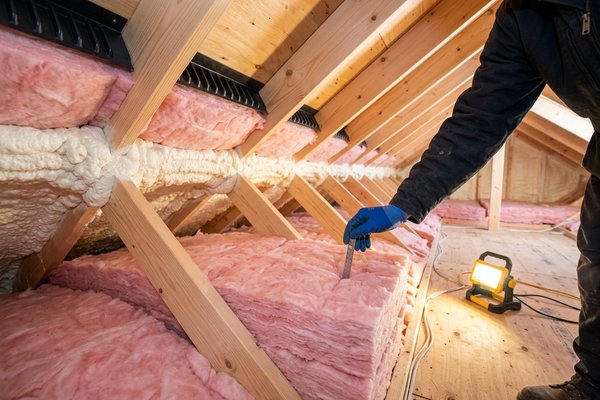
Attic Ventilation and Insulation Upgrades in Park City Utah: Fix the Root Cause of Ice Dams
Attic Ventilation and Insulation Upgrades in Park City Utah: Fix the Root Cause of Ice Dams
Ice dams are a symptom. The disease is heat escaping through your roof deck.
In a properly air-sealed and insulated attic, the roof surface stays cold and uniform throughout winter. Snow sits on top without melting, meltwater never flows toward the eave, and ice dams never form. In reality, most Park City homes — including newer luxury builds — have attic air leaks and insulation gaps that allow conditioned heat to escape directly into the roof assembly, fuelling the ice dam cycle every single winter.
Heat Tape Roofing™ addresses both the symptom with heat tape and the root cause with targeted attic upgrades — delivering the most complete, cost-effective ice dam protection available on Utah’s Wasatch Back.
How Attic Heat Loss Creates Ice Dams in Park City
Conditioned air escapes through dozens of pathways most homeowners never see:
- Recessed light fixtures — each one can leak as much heat as leaving a window open overnight
- Attic hatch and pull-down stair gaps — frequently the single largest air leak in a Park City home
- Plumbing, electrical, and flue penetrations through the top plate of exterior walls
- HVAC duct joints in unconditioned attic spaces
- Compressed or missing insulation at eaves — the most common finding on Wasatch Back properties, where blown insulation settles away from the eave line over time
This escaped heat warms the roof deck from below, melts the snowpack above, and sends meltwater running toward the cold eave overhang — where it refreezes into an ice dam. The fix requires two simultaneous actions: seal the air leaks and upgrade insulation to the correct R-value for Park City’s climate zone.
Utah Building Code and Climate Zone Requirements
Park City falls in IECC Climate Zone 6 — one of the most demanding insulation requirements in the continental United States. Current code and best-practice targets:
| Climate Zone | Code Minimum R-Value | Best Practice R-Value | Typical Park City Finding |
|---|---|---|---|
| Zone 6 (Park City) | R-49 | R-60 | R-19 to R-30 (pre-2000 homes) |
| Zone 6 (Park City) | R-49 | R-60 | R-30 to R-38 (2000–2015 builds) |
| Zone 6 (Park City) | R-49 | R-60 | R-49+ (post-2015, well-maintained) |
Most Park City homes built before 2010 fall significantly short of current best-practice targets. Every R-value shortfall means more heat escaping through the roof deck — and more work your heat tape system has to do to compensate.
What an Attic Ventilation and Insulation Upgrade Includes
Phase 1: Comprehensive Air Sealing
Every penetration through the ceiling plane is sealed with spray foam or code-compliant caulk before any insulation work begins. Air sealing typically delivers a higher return per dollar than adding insulation thickness and is the essential first step — insulation without air sealing is significantly less effective.
Phase 2: Insulation Assessment and Upgrade
Existing insulation is measured, condition-assessed, and supplemented or replaced to reach the target R-value. Blown-in cellulose and open-cell spray foam are the most common choices for Park City attic conditions, given their ability to fill irregular spaces and cover eave areas effectively.
Phase 3: Ventilation Balance Check
Proper attic ventilation — continuous airflow from soffit vents to ridge vent — keeps the roof deck cold from the outside, complementing the insulation that prevents heat from escaping from the inside. Blocked soffit vents are a common finding on Park City homes with deep eave sections, and correcting them is a straightforward, high-impact fix.
Phase 4: Heat Tape Integration Review
After attic upgrades, the existing or planned heat tape layout is reviewed. Reduced heat loss often allows a simplified cable layout, reducing installation cost or electrical consumption by 20–40%.
Cost of Attic Upgrades in Park City, Utah
| Scope of Work | Typical Cost Range | Expected Outcome |
|---|---|---|
| Air sealing only | $800–$2,500 | Most cost-effective first step; immediate impact on ice dam risk |
| Air sealing + blown-in insulation upgrade | $2,000–$6,000 | Brings most homes to R-49+ target |
| Full attic remediation (spray foam, ventilation, baffles) | $4,000–$12,000 | Complete root-cause solution for large luxury homes |
| Combined project discount (with heat tape or roofing work) | Save 15–25% on labour | Best value when bundled with scheduled roof or heat tape work |
Energy savings: Most Park City homeowners see a 15–25% reduction in annual heating costs following full air sealing and insulation upgrades. On a $6,000/year heating bill — typical for a 4,000 sq ft Deer Valley property — that is $900–$1,500 in annual savings. Federal energy efficiency tax credits may also apply; consult your tax advisor regarding current IRS provisions.
Frequently Asked Questions
Q: If I upgrade my attic insulation, do I still need heat tape?
A: In Park City’s climate — with 300-plus inches of annual snowfall, sustained freeze events, and the freeze-thaw cycles driven by Wasatch Range elevation — attic upgrades significantly reduce ice dam risk but rarely eliminate it entirely in isolation. The industry-standard recommendation for this climate zone is attic upgrades combined with heat tape for complete protection. Each system makes the other more effective and efficient.
Q: How much will attic insulation upgrades reduce my heating bills in Park City?
A: Based on Heat Tape Roofing™ projects completed in the Park City area, most homeowners see a 15–25% reduction in annual heating costs following full air sealing and insulation work. Results vary based on the starting condition of the attic, home size, and heating system type.
Q: Will attic work disrupt my home or require us to vacate?
A: Attic work is performed entirely above the living space through the attic access hatch. Most upgrades are completed in one to two days with no disruption to daily routines. Dust containment procedures and daily cleanup are standard practice on every Heat Tape Roofing™ project.
Q: Does Heat Tape Roofing™ handle both the attic upgrades and the heat tape installation?
A: Yes. Heat Tape Roofing™ manages both services as a single coordinated project, eliminating scheduling conflicts and delivering the 15–25% combined labour discount. One contractor, one project, one warranty package.
Fix the Root Cause — Then Eliminate the Symptom
Attic upgrades are the highest-ROI investment Park City homeowners can make for both energy efficiency and ice dam prevention. Heat Tape Roofing™ handles air sealing, insulation, ventilation correction, and heat tape in a single coordinated project — saving time, labour, and money.
Get Your Free Attic and Heat Tape Assessment at heattapeparkcity.com
Serving Park City, Deer Valley, Promontory, Canyons Village, and all Wasatch Back communities in Utah.
